


The Liveability State of Origin: The real rivalry isn’t between Queensland and New South Wales
Article


Head of Customer and Commercial (Government)
Dan Evans was invited to present on the contribution 'access to the natural environment' makes to local area liveability at the 2025 Developing Northern Australia conference. This article is adapted from that presentation.
Northern Australia's communities are sending a clear message: nature is not just a backdrop to daily life, it is a fundamental driver of liveability, health and economic opportunity.
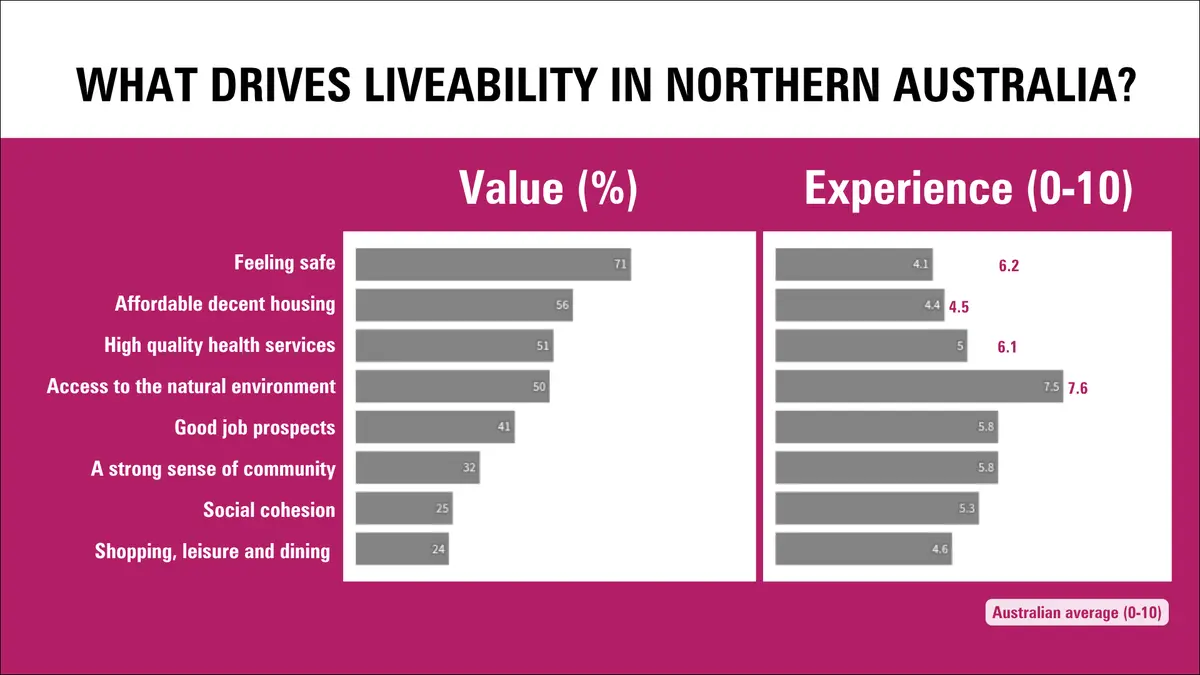
When Northern Australians are asked what makes somewhere a good place to live, their priorities are clear: 'feeling safe', access to 'affordable decent housing', 'high quality health services' and connection to the 'natural environment'.
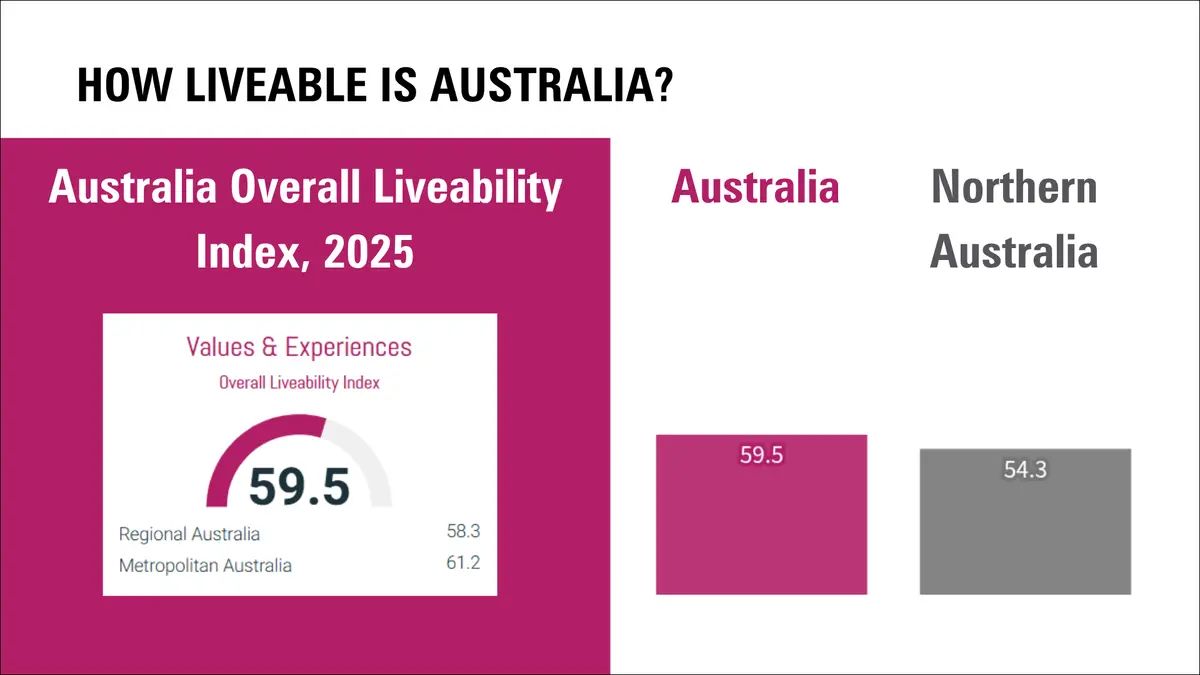
Despite the importance residents place on these factors, lived experience often falls short, both of their own expectations and of the Australian average. That shows up in an Overall Liveability Index of 54.3 out of 100 for Northern Australia, against 59.5 nationally.
Two of the four top priorities stand out as weaknesses: 'feeling safe', rated 4.1 out of 10 against a national average of 6.2, and 'high quality health services', rated 5.0 against 6.1. Those two alone account for much of the region's lower liveability. 'Affordable decent housing' also scores poorly at 4.4, though that sits close to the national average of 4.5.
By contrast, Northern Australians enjoy strong 'access to the natural environment', rating it 7.5 out of 10, almost identical to the national average of 7.6.
Other aspects of liveability, such as public transport, cultural facilities and job prospects, show mixed results. Smaller communities benefit from less congestion and a strong sense of local identity, but those advantages rarely offset the practical challenges of living far from major service hubs. This tension between lifestyle benefits and essential service gaps defines the Northern Australian experience.
Amid these challenges, access to the natural environment stands out as a strength. Nature is not simply a backdrop to life in the north, it is a meaningful contributor to the mental health and resilience of local communities.
The average Northern Australian rates their mental health at 6.6 out of 10, consistent with the national average of 6.7. A closer look at that data reveals an important relationship between residents' mental health and how easily they can reach nature where they live.
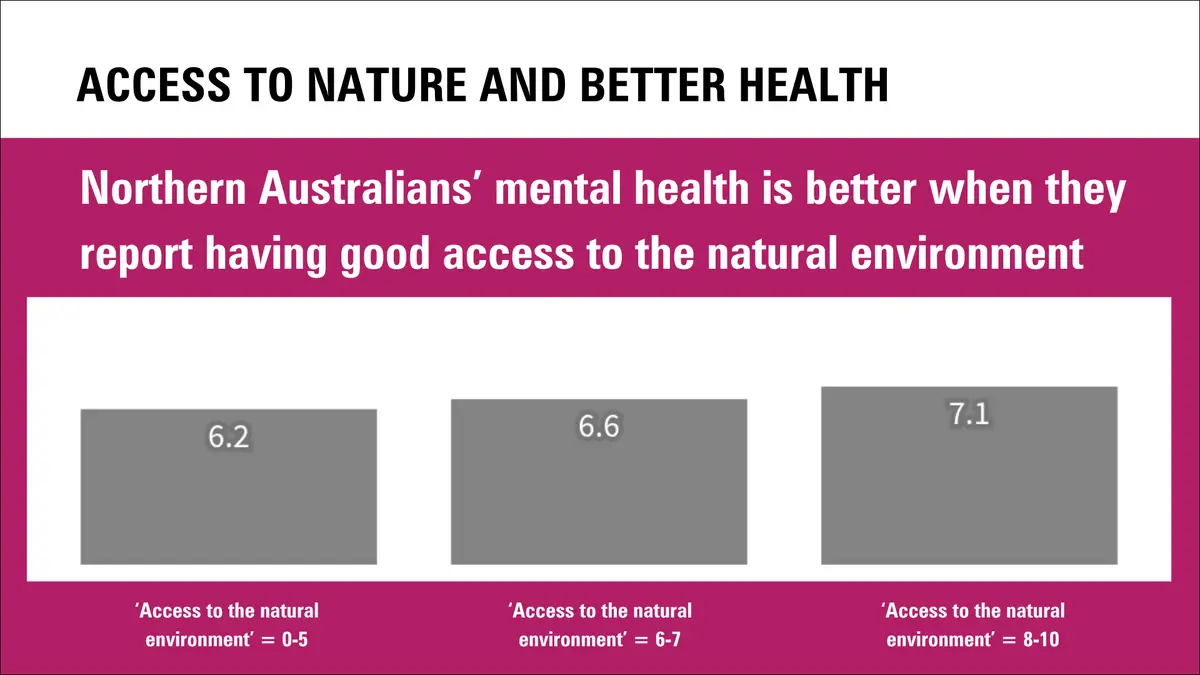
Northern Australians' mental health improves as their access to the natural environment improves. Residents who rated their local area between eight and 10 out of 10 for access to nature reported the best mental health, averaging 7.1 out of 10. Those rating access six or seven reported 6.6. Residents who felt their access was poor, between zero and five, reported an average mental health score of just 6.2.
The pattern points to a clear connection: when Northern Australians can easily experience the natural environment around them, their wellbeing is better. By protecting and enhancing access to the landscapes that make the north distinctive, communities can keep drawing strength from them.
Nature also makes a strong contribution to local economies. Northern Australian communities with good access to nature tend to have vibrant tourism economies, and residents feel the benefit through job creation in tourism and hospitality. Cairns is a clear example: residents rate their access to nature at 8.2 out of 10, and around 1,000 additional accommodation and food services jobs have been created there over the past decade. Townsville tells a similar story, with high reported access to nature and even stronger job growth, at around 1,600 additional jobs.
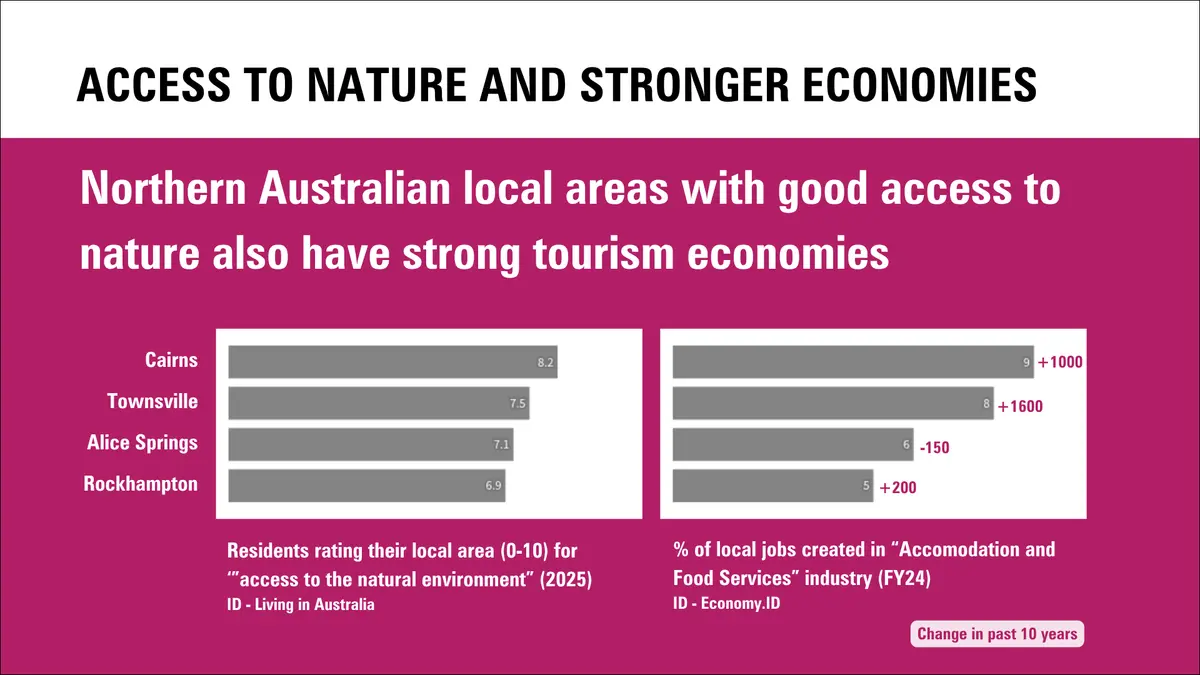
These patterns show that Northern Australia's natural assets do more than shape lifestyle. They underpin local economies, creating opportunities for communities closely tied to their landscapes.
Taken together, these insights show that the benefits of nature in Northern Australia are both personal and collective. By prioritising nature, the north can build more liveable communities, healthier residents and more prosperous economies. Three take-aways stand out.
One caveat matters. These are regional figures. They show where the pressure is building, but the decisions that matter play out council by council, which is what Community Views measures. Rockhampton Regional Council built a shared evidence base for action on exactly that kind of local data.
Get in touch with Dan to discuss how insights like these can help your organisation represent resident priorities in decision-making. You can also access Dan's full presentation from the 2025 Developing Northern Australia conference.
Data informing this article is drawn from Informed Decisions' annual Living in Australia survey, which provides spatial benchmarking and context for our Community Views customers. Community Views is a survey-based service that captures representative insights into community values, experiences and priorities, giving councils and regional partnerships a consistent, credible evidence base for planning and advocacy. By consolidating multiple engagement activities into a single annual or biennial online survey, it saves governments time and money while supporting strategies across housing, health, transport, economic development, local identity and liveability.
Local evidence
The Living in Australia results show what residents value about where they live, how they rate their own local area, and how both compare with the national picture.
