


The Hidden Economics of Spare Bedrooms
Housing


Lead Housing Consultant
Western Australia is often described as one of the most affordable states. But for many regional households, especially those on lower incomes, that story is changing fast.
Across regional WA, renters and prospective home buyers are facing tighter markets, higher prices and fewer options. The good news is that regional councils, RDAs and local partners have tools to respond with confidence.
The housing story in Western Australia is changing fast.
In the 12 months to June 2025, entry-level rentals (the 25th percentile of listed rents) rose more in regional WA than in Greater Perth.
At the same time, rental vacancy rates – a key indicator of pressure in the rental market – fell by around 0.60 percentage points in regional WA, compared with only 0.03 percentage points in Greater Perth over the same period.
Together, this points to a clear pattern:
For regional employers and communities, that translates into growing challenges in attracting and retaining key workers.
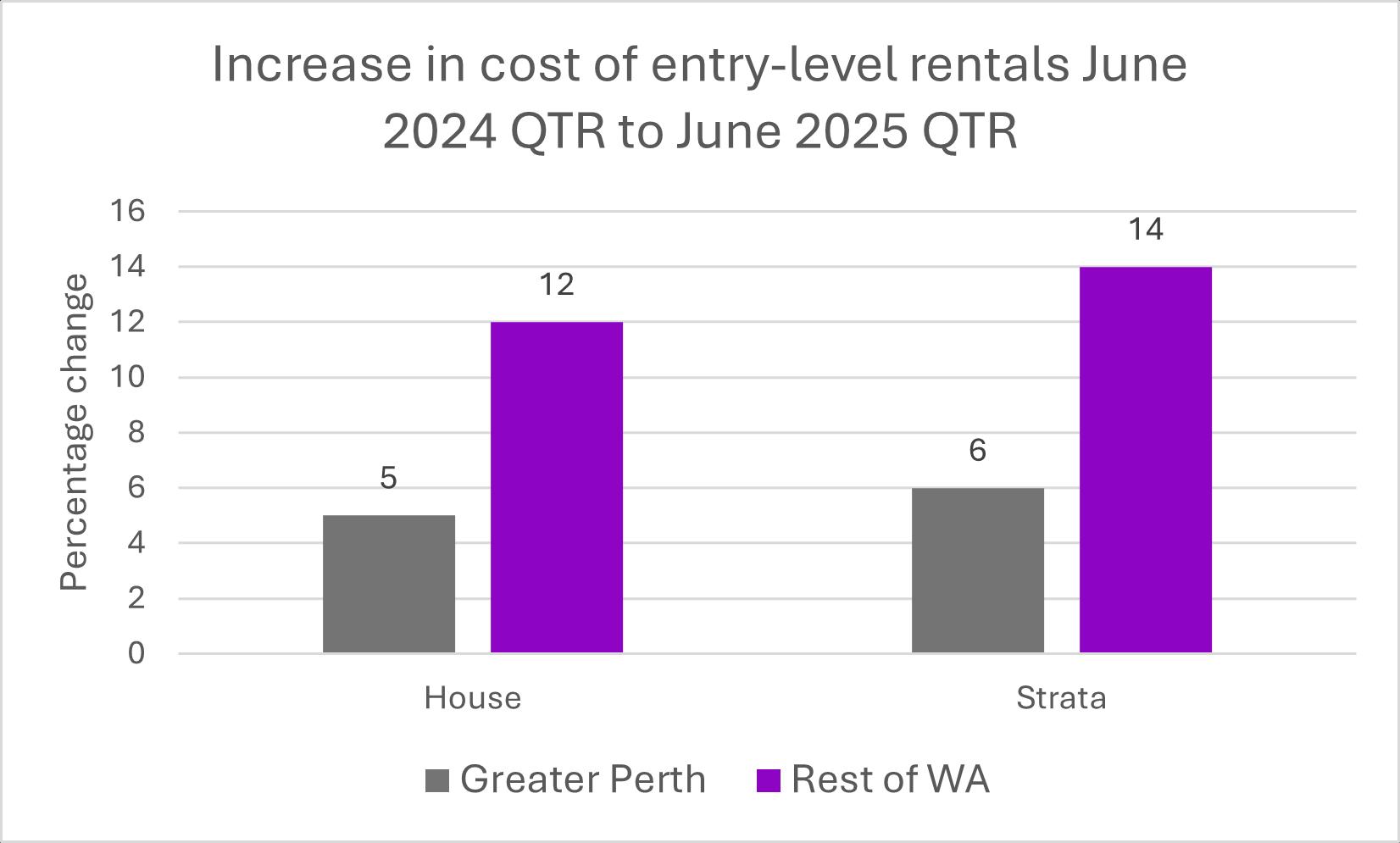
It’s not just renters. Buyers are also facing higher barriers to entry.
PropTrack’s Home Price Index shows that house prices in regional WA grew by around 10.1% over the past year – higher than Sydney or Melbourne and above the regional Australia average of 7.1%. The WA Wheatbelt was reported as one of the strongest-growing regions nationally, second only to Townsville on a percentage basis.
With expanded first-home buyer support expected to bring more buyers into the market while supply remains tight, competition is likely to intensify. Prices are set to keep rising, although the pace will vary from place to place.
For regional decision makers, the message is clear: understanding local housing dynamics at a granular level is now essential, not optional.
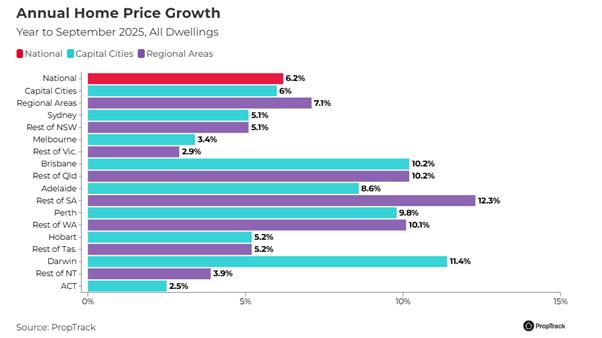
Source: Proptrack
If you’re working in a regional council, RDA, regional organisation or developing housing in WA, these trends raise some big questions:
Answering these questions requires more than a single headline number. It calls for a shared, reliable picture of your local housing system that planners, economic development teams, community services and regional partners can use together.
Many regional councils in WA have small rate bases and limited internal analytical capacity. Accessing detailed, up-to-date housing data across multiple towns and LGAs can be expensive and time-consuming.
To help with this, regional organisations in WA can now access customised regional Housing Monitor sites designed specifically for smaller councils and regional groups.
A regional site can help you to:
WA regions, RDAs and other council alliances can use a regional site as the ‘single source of truth’ to support more efficient collaborations, better decisions about land, infrastructure and services – and to make a stronger case for funding. Call or email us to explore what's possible.
If you are working in regional WA and want to respond proactively to these housing pressures, you can:
If your region is considering an application for funding, or you simply want a clearer picture of your local housing story, a regional Housing Monitor site can give you the evidence and tools to move with confidence.
Get in touch to talk about options for a regional site for your council, region or alliance, and how it can support your planning, investment and funding bids.
Together, regional WA can use data-driven decisions to ensure that people can live close to work, access essential services and continue to call their communities home.
Our specialists have deep expertise in demographics and spatial analysis, urban economics, housing research, social research and population forecasting

Head of Customer and Commercial (Gov.)

Senior Marketing Manager

Demographic Consultant

Client Engagement Manager (WA)

Lead Housing Consultant

Head of Product (Government)

Sales & Account Management (VIC/SA/TAS)

Views Delivery

Forecaster

Customer Success Manager

Customer Success Manager