



The Hidden Economics of Spare Bedrooms
Housing
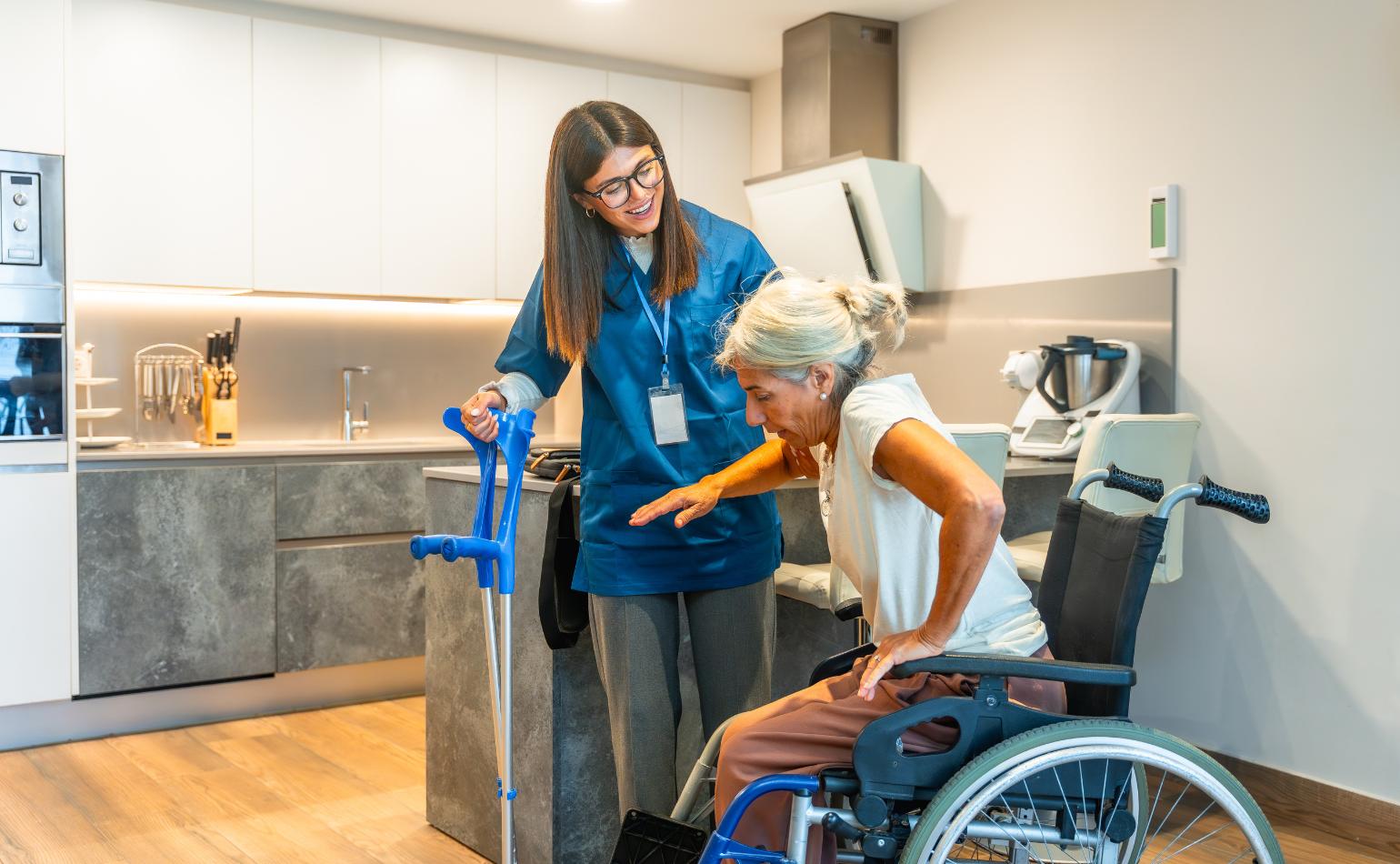
Aged care demand is climbing fast while the local workforce in many regions is already close to its limits.
Demand may grow quickest just where it's hardest to attract, house and retain aged care staff.
Local housing costs and labour market depth now matter as much as population ageing when deciding where services can realistically expand.
Catchment-scale workforce analysis can help providers avoid building services that cannot be staffed. Intelligent catchment analysis guides where to grow, where to consolidate and where to push for broader investment.
These insights form just part of the deeper report Caring for an Ageing Australia. Click to access the full report, with insights on workforce, real case studies, and additional analysis on how to pinpoint high-growth catchments and emerging service gaps.
Australia’s aged care system is heading into a period where demand and workforce are pulling in opposite directions. The number of older people needing care is set to rise sharply, while in many regions the workforce that supports them is already close to its limits.
In practice, this means demand for aged care will grow fastest in exactly the places where it may be hardest to find and keep staff.
Providers who understand this pattern at a local level can make more realistic decisions about where to expand, where to consolidate and how to adapt service models to the workforce they can actually sustain.
Caring for an Ageing Australia describes two major shifts that together define the next two decades.
On the demand side, Australia is moving through two 'waves' of ageing. The first is the growth in people aged 65 and over, which is already well advanced across most states and territories. The second is the rapid rise in people aged 80 and over, whose care needs are usually more intensive and complex. Over the period from 2025 to 2045, the report shows that the population aged 65 and over will increase by millions, and the number of people aged 80 plus will more than double.
On the supply side, the report highlights a workforce that is already stretched. A significant share of Australia's healthcare workforce is approaching retirement age, and a large cohort of experienced staff is set to leave over the coming years. In many of the regions where older populations are growing fastest, there is little slack in local labour markets. Housing costs make it harder for new workers to live near high-need communities, and other sectors are drawing on the same pool of people. In this context, workforce feasibility – the ability to attract, house and retain staff in specific places – now defines what is practically possible, even when demand and funding appear strong.
The report combines three elements to understand workforce pressure across Australia:
When these are viewed together, a pattern emerges in which different types of regions face distinct workforce risks.
Regional coastal retirement hotspots are one of the most exposed groups. These regions are experiencing some of the fastest growth in older populations, often from an already high base. At the same time, they tend to have relatively shallow labour pools and housing markets that have become more expensive over time.
High-demand, high-cost metro margins sit on the edges of major capital cities. Here, the need for aged care is rising as populations age and grow, but housing costs have pushed many workers further from where older people live. Providers in these areas are finding it harder to retain staff, with vacancies persisting and a greater reliance on agency workers. The geography of housing affordability means that even when demand is close at hand, the people needed to deliver care are increasingly distant.
Fast-growing outer suburbs are absorbing large numbers of new residents, including young families, but the growth in health and aged care infrastructure is not keeping pace. Regions such as Ipswich, Sydney’s south-west and Melbourne’s north-west illustrate this pattern. Population growth outstrips the development of hospitals, community health and aged care services, and local workforces are asked to stretch across more clients and larger catchments.
Moderate-risk regions, including some inland regional centres and outer metropolitan areas, currently show more manageable workforce conditions. They benefit from relatively affordable housing and lower immediate retirement exposure among workers. However, the report cautions that these areas could face tightening conditions if national workforce shortages deepen, as they are vulnerable to competition from better-resourced or more attractive labour markets.
Regional cities near capital cities, such as Greater Geelong, Greater Newcastle, Greater Wollongong and the Sunshine Coast, stand out as comparatively resilient. They often have larger and more diversified health care sectors, attract younger workers and remain more affordable than the largest metropolitan markets. Their proximity to capital cities provides access to deeper labour pools and specialist services, making it easier to support flexible staffing models.
Remote and inland regions face a different, more structural challenge. These areas have very limited workforce depth, smaller local economies and weaker access to hospitals and specialist services. They are also more exposed to fluctuations in housing and employment. Without targeted planning and investment, they risk persistent staffing shortages and shrinking service coverage for older residents, even when demand is clear.
While regional patterns are important, workforce feasibility ultimately needs to be understood at the scale of the catchments where services are delivered and staff actually live. The report’s case study of Armstrong Creek, a growing area near Geelong, illustrates this point.
In this case, the analysis looks not just at how many older people live in the area, but at where aged care workers are located and how close they are to a proposed site. It shows that almost 1,500 residential aged care workers live within ten kilometres of the site, representing around 40 per cent of the workers available within a fifty kilometre radius. Nearly 2,500 workers, about 70 per cent of the total within that wider radius, live within twenty kilometres.
This pattern suggests that workforce availability around Armstrong Creek is currently sufficient to support service delivery and future growth. It also highlights the value of catchment-scale analysis. Two regions might have similar numbers of older residents and similar overall workforce statistics, yet look very different when workers’ home locations and travel patterns are mapped against specific service sites.
For providers, this kind of localised assessment can distinguish between places where expansion is realistic and places where workforce constraints are likely to undermine even well-funded and well-designed services. It can also reveal opportunities to reshape rosters, outreach models or partnerships to make better use of the workforce that is actually nearby.
The workforce analysis in Caring for an Ageing Australia offers providers a structured way to move from general concern about shortages to more concrete, place-based decisions. At the strategic level, boards and executives can use regional workforce profiles to calibrate expectations about growth. Coastal retirement hotspots and high-cost metropolitan margins may require more cautious expansion plans, stronger collaboration on staff housing and more intensive recruitment and retention strategies. Regional cities near capitals, by contrast, may support more ambitious investment aligned with their deeper labour pools and relative affordability.
At the operational level, catchment-scale insights can guide everyday decision making. Providers can identify which services are most exposed to workforce risk and which are better positioned to grow. They can focus recruitment efforts in areas where there is untapped labour force potential, and review service coverage where local labour pools are thin. Workforce evidence can also support discussions with governments and partners about the infrastructure, housing and education investments needed to keep services viable in more challenging regions.
Ultimately, the demographic ageing of Australia is locked in. What remains uncertain is how well the workforce that supports older people can be sustained in the places where demand will be greatest. By bringing together local data on population ageing, labour force depth and housing conditions, Caring for an Ageing Australia gives providers a clearer view of that challenge. It does not remove the tension between rising demand and constrained supply, but it helps organisations see where it will be felt most sharply and what options they have to respond.
Read the full report: Caring for an Ageing Australia
Our specialists have deep expertise in demographics and spatial analysis, urban economics, housing research, social research and population forecasting

Head of Customer and Commercial (Gov.)

Senior Marketing Manager

Demographic Consultant

Client Engagement Manager (WA)

Lead Housing Consultant

Head of Product (Government)

Sales & Account Management (VIC/SA/TAS)

Views Delivery

Forecaster

Customer Success Manager

Customer Success Manager